


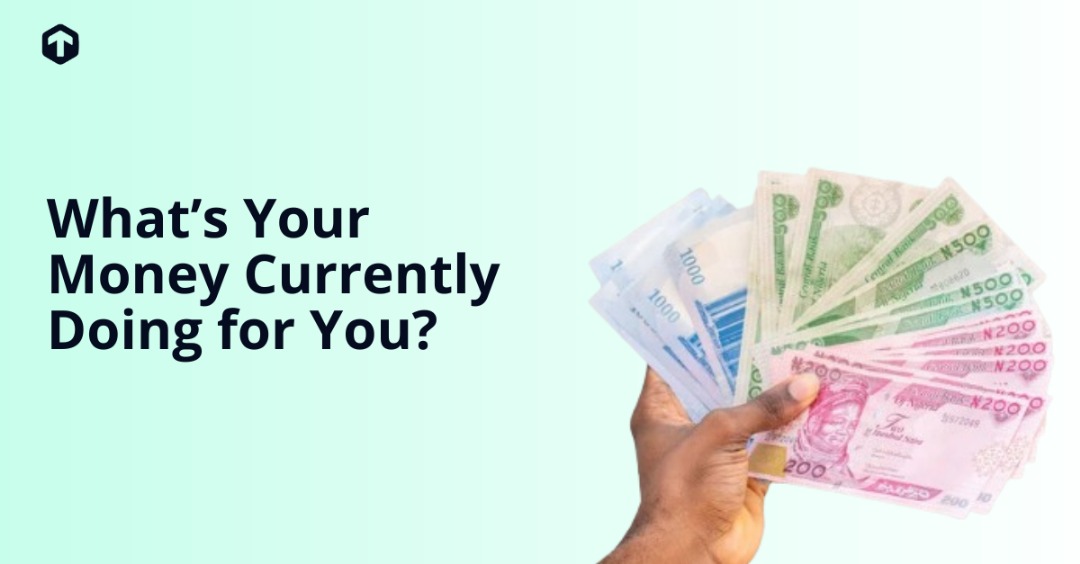

Here’s a question worth sitting with: the money in your bank account right now, what is it actually doing?
If it’s in a regular savings account, the honest answer is “not much”. Most traditional Nigerian bank savings accounts pay between 3% and 6% interest per year. With Nigeria’s inflation running above 20%, that money is quietly losing value every single month it sits there.
This isn’t about blaming your bank. It’s about understanding that in 2026, letting money sit idle in a low-interest account is one of the most expensive financial decisions a Nigerian can make even if it doesn’t feel like a decision at all.
So let’s talk about what your money can actually do and how to make it work harder without taking on unnecessary risk.
Using Trove? Your idle cash can earn up to 16% interest per year through Earn by Trove while staying in the same app you use to invest. Download Trove here
The 4 Things Your Money Can Do
Every naira you own is doing one of four things at any given moment. Only one of them is actually working against you.
1. Grow
Money grows when it’s invested in stocks, ETFs, mutual funds, or interest-bearing savings products. This is where compounding becomes powerful. Your initial amount earns returns, and those returns start earning returns too. Over time, the effect is significant.
A Nigerian earning 16% per annum on ₦500,000 adds ₦80,000 without lifting a finger. At 20%, that’s ₦100,000. Compare that to a traditional savings account paying 4%; that’s only ₦20,000 on the same amount. The gap widens every year you let it compound.
2. Protect
An emergency fund is not a luxury in Nigeria’s economy; it’s survival infrastructure. Medical bills, job loss, sudden family obligations – these don’t announce themselves. Financial advisors recommend keeping three to six months of living expenses in an accessible, interest-bearing account.
The key word is interest-bearing. Your emergency fund shouldn’t just sit idle; it should be earning while it waits.
3. Generate passive income
Passive income means money coming in without active work. In Nigeria, this looks like dividends from Nigerian or US stocks, interest from fixed savings plans, and returns from money market instruments.
This is what separates people who are building wealth from people who are simply working for money. The goal is to eventually have money working hard enough that your investment income supplements – or replaces – your salary.
4. Sit idle (the one to avoid)
Idle money in a low-interest account loses real value every month. With inflation above 20%, ₦1,000,000 sitting in a 4% savings account is worth less in purchasing power at the end of the year than it was at the start, even though the number on your screen is slightly higher.
This is the quiet wealth killer most Nigerians don’t talk about enough.

Where to Put Your Money in Nigeria in 2026
The good news is that 2026 is actually a strong time to be a Nigerian saver. With the CBN holding the monetary policy rate at 27%, banks and fintechs are offering savers record-high interest returns.
Here’s how to think about your options:
- Earn by Trove (up to 16% p.a. in naira, up to 5.5% in dollars) Earn by Trove is different from the options above in one specific way: it lives inside the same app you use to invest in Nigerian stocks, US stocks, and ETFs. You’re not moving money between apps or platforms. Idle cash earns interest in the Trove app, and when you’re ready to invest, you move it directly into the market – no transfers, no delays.
- High-yield fintech savings (14–28% p.a.) Platforms like PiggyVest, Cowrywise, etc. significantly higher returns than traditional banks, typically between 14% and 28% depending on how long you lock your funds. Fintech platforms operate leaner, branchless models, which allows them to pass savings directly to customers through better rates. The trade-off is that your money is in a savings-only platform.
How Earn by Trove Actually Works
- Download the Trove app
- Log in and tap the Earn icon on your dashboard
- Choose your savings currency: naira (up to 16% p.a.) or dollars (up to 5.5% p.a.)
- Select your savings duration: 3, 6, 9, or 12 months
- Enter your amount and name your plan (e.g., “Emergency Fund” or “Holiday Fund”)
- Choose your payment method and fund the plan
Your money starts earning from day one. And when your plan matures, you can reinvest, withdraw, or move directly into stocks all within the same app.
Naira vs. Dollar Savings: Which is Better?
This depends on what you’re saving for.
Save in naira if:
- Your goal is in Nigeria: rent, school fees, a car, a business
- You need the higher interest rate (16% vs 5.5%)
- Your income is in naira and you want to avoid exchange rate risk on the way out
Save in dollars if:
- You’re saving for something dollar-denominated:such as travel, foreign school fees, international purchases
- You want a hedge against naira depreciation
- You’re comfortable with a lower percentage return in exchange for dollar stability
Many Trove users do both a naira plan for short-term Nigerian goals and a dollar plan as a long-term hedge.
A Simple Framework for Making Your Money Work
You don’t need to be a finance expert to do this well. Here’s a framework that works for most Nigerian salary earners:
Step 1 — Build your emergency fund first. Three months of living expenses in a flexible, interest-bearing account. Don’t invest until this exists. This is your financial shock absorber.
Step 2 — Put your short-term savings goals to work. Saving for rent, a trip, or a purchase in the next 6–12 months? Put it in a fixed savings plan earning 14–16% instead of letting it sit idle.
Step 3 — Start investing what’s left. What remains after your emergency fund and short-term savings is money you can afford to put into the market. Even ₦5,000 a month in a diversified portfolio of Nigerian and US stocks builds into something meaningful over 3–5 years.
Step 4 — Automate and stop thinking about it. Set up recurring contributions. Automation removes the temptation to skip months and removes the decision fatigue of wondering whether “now is a good time”.

Frequently Asked Questions
Is Earn by Trove safe?
Yes. Trove is SEC-licensed and regulated in Nigeria. Your funds are not invested in the stock market through the Earn product; they earn fixed returns, similar to a fixed deposit.
Can I withdraw before my plan matures?
This depends on the plan you choose. Check the terms in-app before locking funds, especially if you might need access before the maturity date.
What’s the minimum amount to start?
You can start Earn by Trove from ₦5,000. There’s no large minimum entry point.
Is 16% actually beating inflation?
Nigeria’s inflation has been running above 20%, which means 16% naira savings doesn’t fully beat inflation in real terms. However, it significantly outperforms traditional bank savings rates of 3–6% and combines with the option to invest the remainder in equities that may outperform inflation over the longer term.
Can I use Earn and also invest in stocks on Trove?
Yes, and this is the main reason Trove users choose Earn over standalone savings apps. Your savings and your investment portfolio are in the same place.
Conclusion
Your money is going to do something whether you pay attention or not. Left in a low-interest account, it quietly shrinks in real value. Put to work in a high-yield savings product or invested in the market, it compounds. The decision isn’t complicated. The starting point is smaller than most people think.
Download the Trove app and start with Earn by Trove naira savings from ₦5,000.